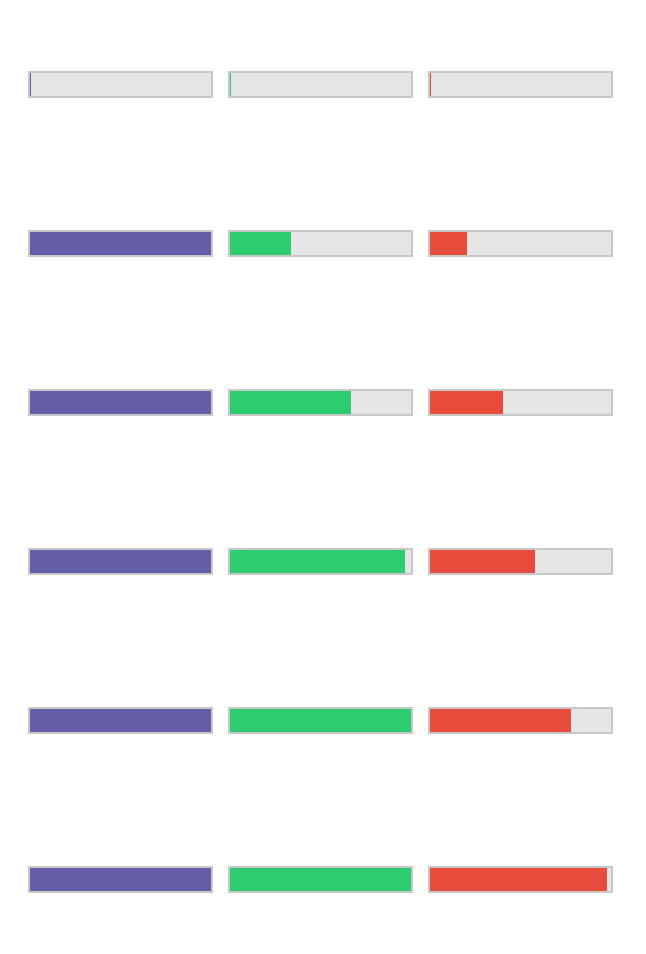
When a website loads fast, nobody notices, and that’s the goal. One to two seconds feels natural. You click and the page is simply there. Most people don’t think about the technology at all.
Once a site creeps into the three- and four-second range, visitors start to feel it. Not in a dramatic way, more like a tiny pause that breaks the flow. They hesitate. They shift their attention. Some stay, some wander off. You’ve probably done it yourself without even realizing it.
Five to six seconds is where most people quietly drift away. Not out of impatience, it’s just long enough to feel like something isn’t working. Phones get set down, tabs get closed, and the moment is gone. And most visitors never label it as a “slow website.” They simply assume the information isn’t available or try again later. It’s subtle, but it affects schools, small businesses, and community organizations more than they ever realize.
Speed issues don’t mean the site is broken. Most of the time, it just means the website has picked up weight over the years; bigger images, extra scripts, tools nobody uses anymore, or hosting that hasn’t kept up with traffic.
It’s normal. And fixable.
If anything in this sounds familiar, the hesitation, the delay, the sense that visitors aren’t sticking around, that’s usually the first sign your site is asking for a tune-up. A few thoughtful adjustments can bring it back to feeling fast, responsive, and trustworthy again.
And here’s the part most people don’t realize: what you see on your own device isn’t what everyone else sees. Your browser has loaded your site dozens or even hundreds of times, so it pulls most of it from memory. A first-time visitor doesn’t get that shortcut. They see the real speed, the fresh load, and that experience can be very different from yours. Want to test that out? Open a new incognito browser window, type in your site address, hit enter and watch!