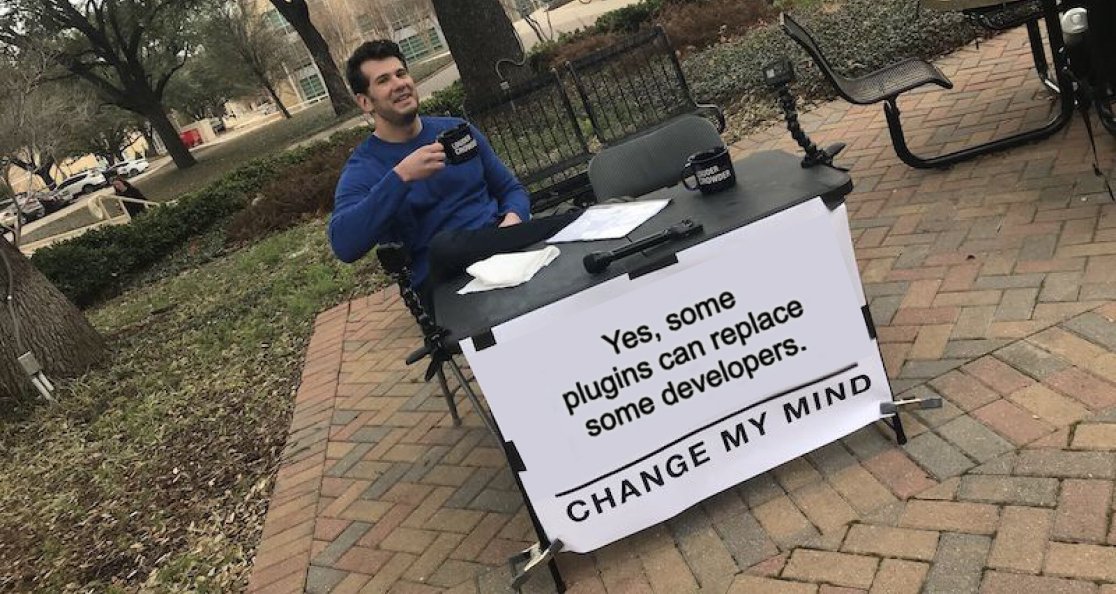
Yes, some plugins can replace some developers.
Plugins can add a lot of useful functionality to a website. Forms, calendars, SEO tools, backups, security scans. For many websites, they solve real problems quickly.
Need a form? Install a plugin.
Need a gallery? Plugin.
Need analytics? Plugin.
Before long, a website can gain a lot of capability without writing a single line of code.
But plugins add features. They don’t design systems.
Every plugin introduces new code, new updates, and new dependencies. Over time, those pieces start interacting in ways no one originally planned.
One update breaks another plugin.
Two plugins try to do the same job.
Performance slows down as scripts pile up.
Security risks increase as outdated software lingers.
None of that happens overnight. It happens gradually, as features stack up.
The problem isn’t plugins themselves. Many are excellent tools. The problem is assuming that enough plugins eventually become a system.
They don’t.
A well-built website has structure underneath the features. Someone has decided what belongs there, what doesn’t, and how everything should work together over time.
Plugins can extend that structure. They can’t replace it.
A website built entirely by stacking plugins often works, until it becomes fragile. Updates feel risky. Changes take longer than expected. Simple improvements turn into troubleshooting sessions.
That’s when the difference becomes clear.
Plugins add features.
Developers design architecture.